

The hospitality industry has always been known for human connection, personalized service, and memorable guest experiences. From luxury hotels and fine-dining restaurants to airlines and tourism businesses, hospitality thrives on the ability of professionals to make people feel welcomed and valued. For decades, hospitality education focused mainly on operational skills such as food production, front office management, housekeeping, communication, and customer service. While these skills remain important, the industry is now witnessing a major transformation driven by technology, automation, and digital innovation.
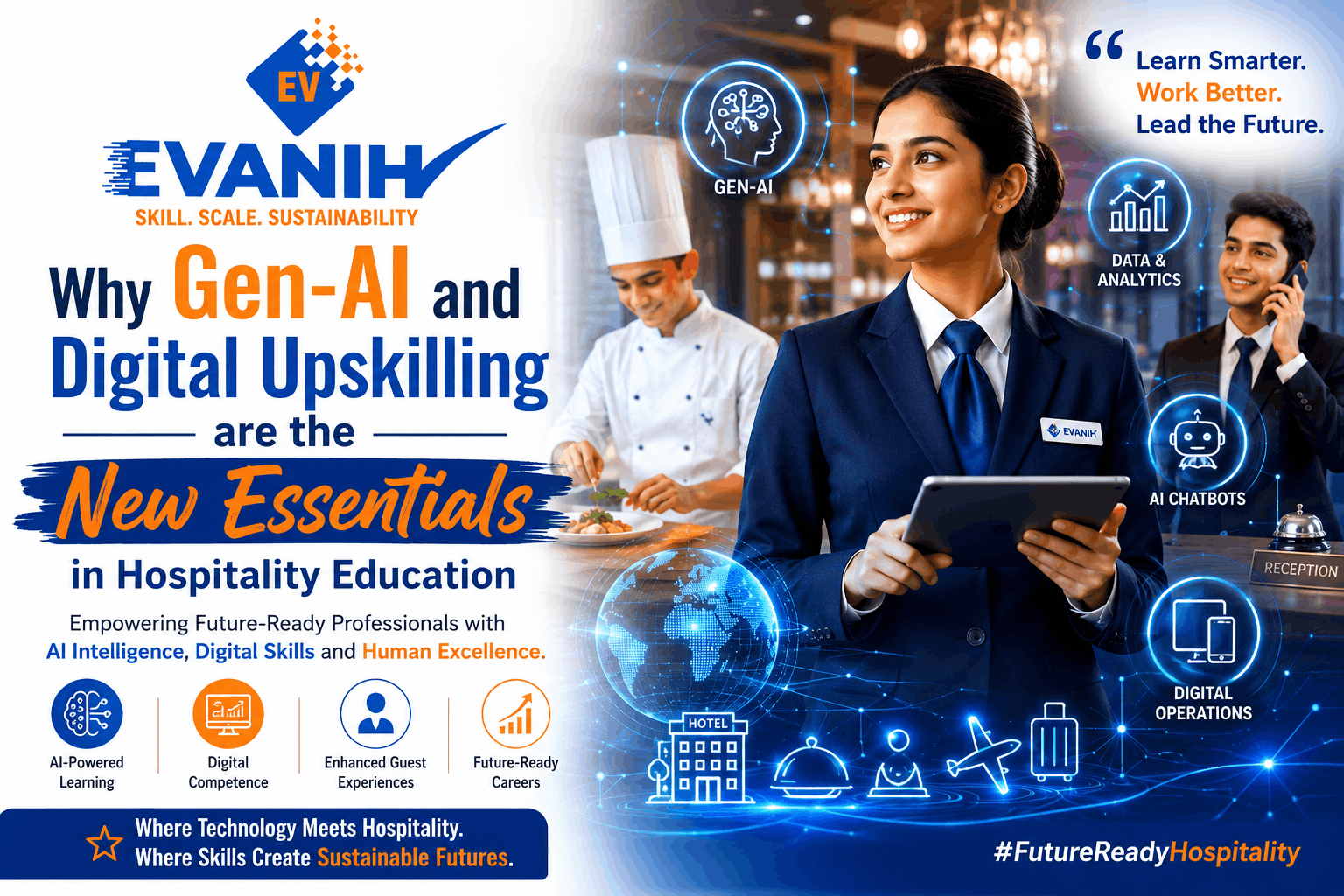
Today, the hospitality sector is no longer operating in a purely traditional environment. Guests now expect seamless digital experiences alongside excellent service. Online bookings, mobile check-ins, AI-powered customer support, digital payments, personalized marketing, and automated guest engagement systems have become common across hotels and tourism businesses worldwide. As a result, Gen-AI (Generative Artificial Intelligence) and digital upskilling are rapidly becoming essential components of hospitality education.
The hospitality professionals of tomorrow will not only need operational expertise but also the ability to understand and work with modern technology. Educational institutions that fail to adapt to this reality risk producing graduates who may struggle to meet industry expectations.
The Digital Transformation of Hospitality
Technology has changed the way the hospitality industry functions. Earlier, hotel operations were heavily dependent on manual processes, paperwork, and traditional communication systems. Today, hotels use advanced Property Management Systems (PMS), Customer Relationship Management (CRM) software, online booking engines, AI chatbots, and data analytics tools to improve guest satisfaction and operational efficiency.
Guests now prefer speed, convenience, and personalization. They expect hotels to remember their preferences, provide instant responses, and offer seamless digital interactions. A guest can book a room online, receive automated confirmation messages, complete a mobile check-in, request services through an app, and even leave digital feedback — all without visiting the front desk physically.
To meet these evolving expectations, hospitality businesses are investing heavily in technology. This shift has created a strong demand for hospitality professionals who understand both guest service and digital systems.
Understanding the Role of Gen-AI in Hospitality
Generative AI refers to artificial intelligence systems capable of creating content, analyzing information, generating responses, and assisting with decision-making. In hospitality, Gen-AI is already influencing multiple areas of operations and guest engagement.
Hotels and hospitality businesses are using AI tools for:
- Automated guest communication
- Personalized marketing campaigns
- Dynamic pricing strategies
- Online reputation management
- Predictive guest behavior analysis
- Staff training support
- Customer service chatbots
- Data-driven decision-making
For hospitality students, Gen-AI can become a powerful learning and productivity tool. Students can use AI platforms to create presentations, draft professional emails, design marketing ideas, prepare reports, practice interview skills, and enhance communication abilities.
For example, a hospitality management student can use AI tools to develop a digital campaign for a hotel brand, analyze customer feedback trends, or simulate guest handling situations. Culinary students can explore global food trends, menu concepts, and presentation ideas using digital research and AI-based creative tools.
Gen-AI does not replace human hospitality professionals. Instead, it supports them by reducing repetitive tasks and improving efficiency, allowing professionals to focus more on guest relationships and service quality.
Why Digital Upskilling is Now Essential
The hospitality industry today expects graduates to be digitally aware and technologically adaptable. Earlier, hospitality recruiters mainly looked for communication skills, grooming standards, and operational knowledge. While these qualities still matter, employers now increasingly prefer candidates who can work confidently with modern digital systems.
Digital upskilling includes learning:
- Property Management Systems (PMS)
- Online booking platforms
- Digital marketing
- Social media management
- Data analysis
- Online reputation management
- AI-powered customer engagement tools
- Revenue management software
- Virtual collaboration platforms
A student who understands hospitality operations along with digital technology gains a clear advantage in employability. Hotels today are not only hiring service professionals; they are hiring future-ready professionals capable of adapting to evolving technologies.
Digital literacy has now become a core employability skill rather than an optional advantage.
Gen-AI and digital upskilling are no longer optional additions to hospitality education — they are becoming essential foundations for career growth and industry relevance. The hospitality industry is evolving rapidly, and educational institutions must evolve alongside it.
The future hospitality workforce will require a unique combination of service excellence, emotional intelligence, operational expertise, and digital capability. Institutions that successfully integrate technology-driven learning with practical hospitality training will prepare students for long-term success in a highly competitive global industry.
Hospitality has always been about creating meaningful experiences. In the coming years, those experiences will increasingly be shaped by the successful integration of human service and digital innovation. The future belongs to hospitality professionals who can embrace both.