

Culinary tourism is no longer just about eating food. It is about experiencing a place through its flavours, people, traditions, stories, and senses.
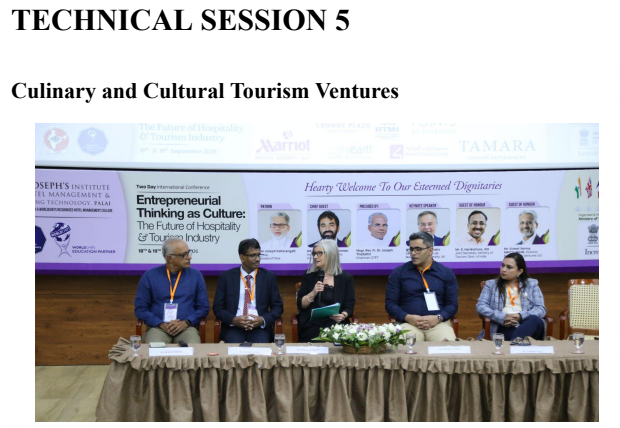
It was a privilege to be part of Technical Session 5 – Culinary and Cultural Tourism Ventures, where the conversation explored how culinary experiences can become meaningful tourism ventures through thoughtful experience design.
As destinations around the world look for ways to differentiate themselves, food has emerged as one of the most powerful ways to connect travellers with local culture. But the real opportunity lies in moving beyond simply serving a traditional dish.
From Food Service to Experience Design
A memorable culinary experience engages much more than taste.
It brings together the five senses – taste, smell, sight, sound, and touch – while creating an emotional connection with the destination.
Imagine a traveller entering a local market, meeting the vendors, discovering unfamiliar ingredients, understanding their origins, selecting them, and then learning how a traditional dish is prepared.
The experience doesn’t end when the food reaches the table.
The story behind the ingredient, the sound of the market, the aroma of freshly prepared food, the interaction with local people, and the opportunity to participate all become part of the experience.
This is where experience design becomes critical.
From Markets to Masterclasses
Culinary tourism offers tremendous opportunities to create experiences across the entire journey.
Some examples include:
Local Market Visits
Travellers can explore local markets, interact with vendors and discover indigenous ingredients while learning about the destination’s food culture.
Ingredient Selection
Allowing visitors to personally select ingredients creates participation and gives them a deeper understanding of local produce and culinary traditions.
Cooking Demonstrations
A demonstration becomes far more meaningful when it includes the history, stories and cultural significance behind the dish.
Hands-On Culinary Experiences
Instead of simply watching, travellers can participate in preparing the food themselves.
Culinary Masterclasses
Masterclasses can transform a traditional recipe into an educational and memorable experience, connecting travellers directly with local chefs, home cooks, artisans and culinary experts.
The Story Is as Important as the Dish
Every destination has culinary stories waiting to be told.
A spice can tell the story of a region’s trading history.
A recipe can reflect generations of family traditions.
A cooking technique can represent indigenous knowledge.
A local ingredient can connect tourism with farmers and communities.
Therefore, culinary tourism can become much more than a revenue-generating activity. It can support cultural preservation, local entrepreneurship, community participation and sustainable tourism development.
Designing Experiences That Create Value
The future of culinary tourism will not be defined simply by what we serve, but by how we make people feel while experiencing it.
For tourism entrepreneurs, hospitality businesses and destinations, the opportunity is to design experiences that are:
- Authentic – rooted in the local culture and community
- Participatory – allowing travellers to become part of the experience
- Sensory – engaging all five senses
- Story-driven – connecting food with history, people and place
- Sustainable – creating value for local communities and producers
- Memorable – leaving travellers with stories they want to share
From Traveller to Participant
The most powerful shift is from making the traveller a consumer to making them a participant.
When a traveller selects an ingredient, learns a traditional technique, prepares a local dish, speaks with the person who grew the produce, and finally sits down to enjoy the meal, they are no longer simply consuming food.
They are experiencing the culture of the destination.
And that is the real potential of culinary and cultural tourism.
From markets to masterclasses, from ingredients to stories, and from food to experiences – the future of culinary tourism lies in designing journeys that people can taste, feel, remember and share.
It was an enriching experience to contribute to this important conversation alongside esteemed delegates and industry leaders at the international conference.
Culinary tourism is not just about what is on the plate.
It is about the story, the people, the place – and the experience we design around it.
— Ms. Vanishree Koul
Founder & Managing Director, EVANIH